Imperial Recognized as 2025 Best & Brightest Company to Work For in West Michigan! Learn More

Imperial Clinical Research Services Blog
  • Services
    • What We Do
    • Study and Site Print Materials
    • Clinical Trial Translation Management
    • Ancillary Trial Supplies and Equipment
    • Clinical Trial Patient Engagement
    • CRO-Centered Services
    • A La Carte Services
  • Resources
    • Ebooks
    • Case Studies & Fact Sheets
  • About
    • About Us
    • News
    • Events
    • Corporate Responsibility
  • Contact
    • Contact Imperial
    • Career Opportunities
  • Blog
  • Marketplace
  • Services
    • What We Do
    • Study and Site Print Materials
    • Clinical Trial Translation Management
    • Ancillary Trial Supplies and Equipment
    • Clinical Trial Patient Engagement
    • CRO-Centered Services
    • A La Carte Services
  • Resources
    • Ebooks
    • Case Studies & Fact Sheets
  • About
    • About Us
    • News
    • Events
    • Corporate Responsibility
  • Contact
    • Contact Imperial
    • Career Opportunities
  • Blog
  • Marketplace
Category:

Business Insights

    Business Insights

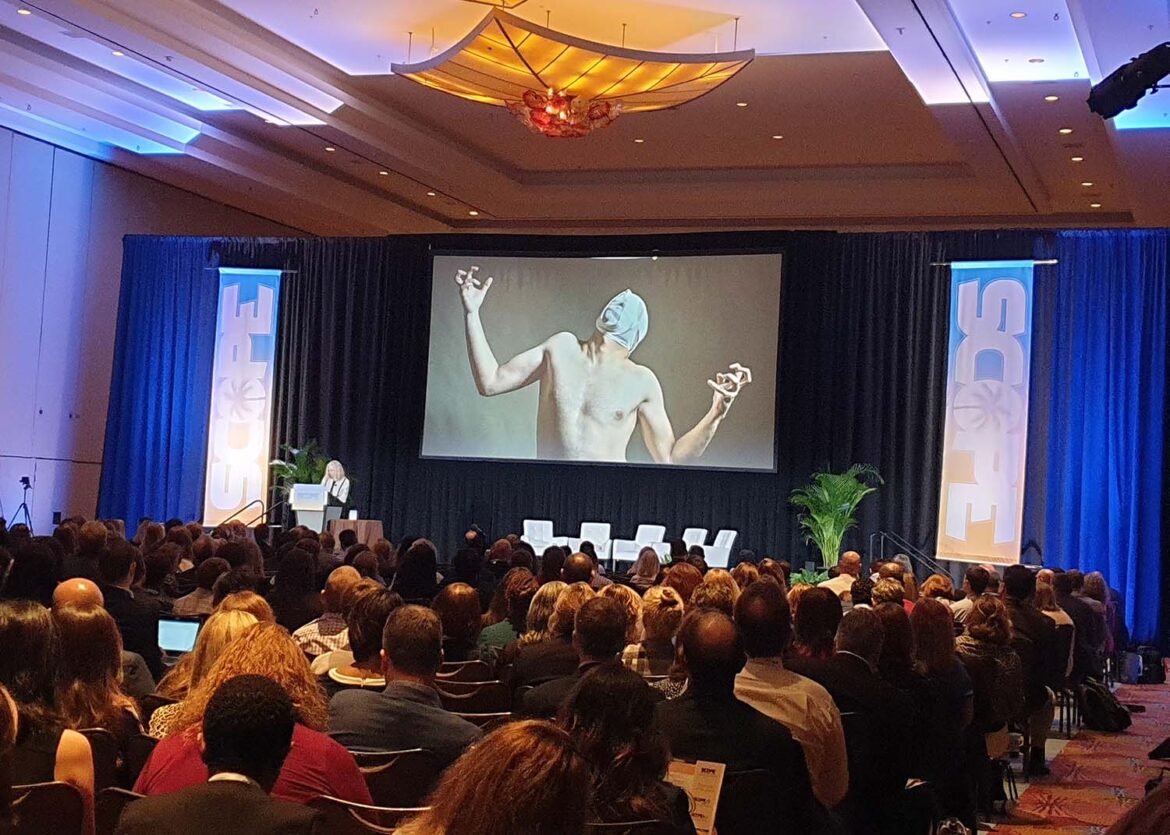
    Report from SCOPE Summit 2020

    by Imogen Cheese March 12, 2020
    written by Imogen Cheese

    Conferences can be indicative of the mood in an industry. They set the stage for what is to come, and also the issues and challenges being faced at that very moment.

    SCOPE Summit 2020 in Orlando was no exception to that rule. There was a noticeable country absence at the event, which was a great shame, as there are currently some fantastic initiatives and trials being operated and brought out of the Far East and China. The conference also seemed to show a turning tide on the discussions, and this was very much felt throughout many of the talks.

    My Imperial colleagues Dan McDonald, Dave Woodard, and I are often to be found in the vendor hall at a booth, talking to clients and other delegates as they mingle. We have expressed a few times that this year we might switch things around and take in the talks instead – and I for one am delighted that we did.

    There were some truly excellent speakers and the subject range was diverse. When I wasn’t meeting with clients, I spent most of my time in the recruitment and engagement track. It’s a subject close to my heart, and very much drives what I do at Imperial. What I saw and heard was about a changing mood and attitude. The patient is no longer a faceless participant of a study, a number on the trial database… but a partner in the making.

    According to Hassan Kadhim of Bristol-Myers Squibb, trial design will start to evolve and get shaped into decentralized trials. The focus is less upon just home transportation or access to the tests from your local center, but deconstructing the pre-existing rules for when and where a trial should be run. That means determining the needs of your patient community and creating a trial with the flexibility to meet the changing needs of your patients.

    Another speaker in the same session on methodologies for connecting with patients shared the number 17 with the audience. This is the average number of times a day every person looks online at social media. That includes LinkedIn, Twitter, Facebook, Instagram, and any other form of social outreach. These online communication platforms are proving to be the greatest places where we can connect to potential trial participants.

    At a fascinating table discussion on strategies for patient centric trial design and digital patient engagement, one of the moderators, John Linnell (a COPD patient and member of AstraZeneca’s patient partnership program) shared the fantastic engagement model that AstraZeneca has implemented. Over 80 percent of the studies they run now include patients at some point in the startup process: reviewing protocols, analyzing patient materials, and taking part in surveys to access patient needs.

    The overriding feeling and take home was one of a shift in thinking. The patient as the partner.

    Every nine years, the cost of bringing a drug to market doubles. So the idea that connecting with patients and including patients in trial design isn’t just effective recruitment, it’s logical for retention and reduced attrition rates, too. If a trial is designed to better meet the patient and care partner’s needs, the patient will be more likely to take part in the study, the study will recruit on time, and costs won’t spiral out of control.

    Another speaker shared a statistic that we probably already know: oncology studies take 20 percent longer to get from Phase 1 to market, and rare diseases can take 70 percent longer than other indications. We heard that a lack of patients meeting inclusion/exclusion criteria was an issue, with patients not knowing about a study because they didn’t live near a center. However, they also shared that sometimes patients don’t hear back from sites because the sites might be overwhelmed. When we implement recruitment initiatives, we shouldn’t just focus on supporting the patients and ensuring the trial meets their needs, too – we should also look at ensuring the sites get the support they need!

    There was a fantastic talk from Aaron Fleishman and Jessica Kim from BBK where they took on the role of MythBusters! If the patient is tired after a long day at the hospital, implementing support for them to ensure they had a hot healthy meal at the end of the day wasn’t just a useful solution for retention. It showed a greater level of understanding for what the patient actually needed and what issues they face not only when they take part in a clinical trial but in their day-to-day lives. This, along with so many other initiatives, was like a breath of fresh air – especially for me with my own experience as a patient and my connections with other patients.

    Melissa Harris from Covance asked and effectively answered the question on whether industry could hear and were listening to what the patients were saying. Covance has patient registers and cohorts on its global database with over 30 countries and 50 indications accounted for. This enables them to have a greater insight into unmet needs, the burden that is faced by patients before and during trials, and helps to alleviate the barriers to adherence that so many trial face.

    The idea that patients have a voice, and that their voice can be used effectively, showed real growth and development in industry thinking over the last five years. The message spoken the most was not patient centricity, but patient partnership. Christina Roman from the Cystic Fibrosis Foundation talked about the fantastic work done by EUPATI (a European trial patient engagement and education initiative I was already aware of and am a huge fan of!). Christina spoke of how many different points in the medicine R&D process EUPATI includes patient voices, and of the fabulous community voice initiative that the CFF has created to ensure the voice of the cystic fibrosis patient is heard and used to the wider benefit of the community.

    If we can learn anything from SCOPE 2020, it is that we are evolving. As an industry, pharma is notoriously slow to adapt and welcome change, but this year there were many discussions that showed we are willing to open our minds to new opportunities.

    March 12, 2020 0 comment
    0 FacebookTwitterLinkedinEmail
  • Business Insights

    Our Best Blog Posts of 2019

    by William McEwen January 15, 2020
    by William McEwen January 15, 2020

    Happy 2020 from Imperial Clinical Research Services! In welcoming the New Year, it’s a good time to reflect on the highlights of 2019 and look ahead to new opportunities. Imperial proudly provides clinical research-oriented blogs and ebooks provided by our diverse and knowledgeable subject matter…

    0 FacebookTwitterLinkedinEmail
  • Business InsightsClinical Trial Writing and DesignPatient EngagementSite Materials & Logistics

    Plain Language – It’s for everyone

    by William McEwen October 24, 2019
    by William McEwen October 24, 2019

    According to the Institute of Medicine, there is a significant disparity between the health information people receive and actually understand. Even those in the health care industry can become vulnerable to not comprehending health information. When experiencing poor health or worry and stress about an…

    0 FacebookTwitterLinkedinEmail
  • Business InsightsPatient Recruitment and Retention

    Site Motivation: A Key to Study Success

    by Hope Cullen September 25, 2019
    by Hope Cullen September 25, 2019

    Motivating clinical research sites is one of the most overlooked factors in the pharmaceutical research industry. Even when sponsors and CROs do acknowledge the issue, they are often at a loss for workable solutions. This is precisely the reason Imperial offers site surveys, interviews, and…

    0 FacebookTwitterLinkedinEmail
  • Business InsightsClinical Trial Writing and Design

    Erica Manning: From One Trial to Another

    by William McEwen August 29, 2019
    by William McEwen August 29, 2019

    This year, the Imperial Clinical Research Services blog is featuring professional insights from some of the women leaders in our company. I sat down for a discussion with Erica Manning, who is the manager of Imperial’s creative and translation services teams, to learn about her…

    0 FacebookTwitterLinkedinEmail
  • Business Insights

    Coping with Change

    by Andrea Balahoski July 16, 2019
    by Andrea Balahoski July 16, 2019

    Change: Recognize the Challenges and Dive In Change is difficult for most. And why shouldn’t it be? We’re all hard-wired to like certainty in most situations. We prefer our usual morning routine, and going to the office where we work in our normal workspace with…

    0 FacebookTwitterLinkedinEmail
  • Business InsightsPatient Recruitment and Retention

    The pursuit of “real” patient data: A look at wearables and trackers

    by Eirini Aristotelous May 6, 2019
    by Eirini Aristotelous May 6, 2019

    Despite the recent boom and popularity of wearable technology, it isn’t a new thing. Wearables in clinical research have been around since the 1950s to track activity and since the ‘70s to track circadian rhythms. In recent years, more and more consumer devices have entered…

    0 FacebookTwitterLinkedinEmail
  • Ancillary Trial Supplies and EquipmentBusiness Insights

    Clinical Trial Logistics: Here’s How to Clear Customs

    by Dan Polkowski May 1, 2019
    by Dan Polkowski May 1, 2019

    Updated: July 11, 2022 An important member of your study team is a person you might never meet! It’s your registered importer, known formally as the importer of record (IOR). When shipping study materials or medical equipment internationally, it is not unusual for them to…

    2 FacebookTwitterLinkedinEmail
  • Business Insights

    Imogen Cheese: Compassionate Trial Professional

    by William McEwen April 2, 2019
    by William McEwen April 2, 2019

    Women have had a tremendous impact on the clinical trials industry, as study participants, advocates, and industry personnel and leaders. They have played a transformative role and paved the way for improved and compassionate advances in health care and research. Every March, Women’s History Month…

    0 FacebookTwitterLinkedinEmail
  • Business Insights

    Brexit, Medicines, and Trials: A Report from the U.K.

    by Imogen Cheese March 12, 2019
    by Imogen Cheese March 12, 2019

    Several members of my family live in mainland Europe and join huge numbers of British expats concerned about how Brexit will impact their daily lives. My father, who takes a daily medication to treat his prostate cancer, fears the potential impact on reimbursement and therefore…

    0 FacebookTwitterLinkedinEmail
  • 1
  • …
  • 5
  • 6
  • 7
  • 8
  • 9
  • …
  • 14

Welcome

Welcome

The Imperial blog features content of interest to life-science professionals, with a special focus on clinical trials. We hope you will enjoy our experts’ perspectives, and invite you to join the conversation by leaving your comments. Please let us know of any additional topics you would like to see covered here.

Signup for our Blog Subscription

Signup for our Blog Subscription

Keep in touch

Twitter Linkedin Youtube Email RSS

Popular Posts

  • 1

    Clinical Research Phases and the Path to Drug Approval

    August 8, 2023
  • 2

    See Do Get

    August 12, 2014
  • 3

    Google Translate: The Unwitting Confidentiality Flaw

    April 15, 2020
  • 4

    25 Reasons People Aren’t Enrolling in Your Clinical Trial

    October 29, 2015
  • 5

    Clinical Trial Supply Chains: The Key to Avoiding Disruptions

    May 10, 2022

Categories

  • Ancillary Trial Supplies and Equipment (34)
  • Business Insights (132)
  • Clinical Trial Writing and Design (39)
  • Life-Science Events (56)
  • Patient Engagement (38)
  • Patient Recruitment and Retention (98)
  • Site Materials & Logistics (50)
  • Study Site Management (22)
  • Translation of Study Materials (18)
Imperial Clinical Research Services Blog

Imperial is a global leader in clinical trial solutions and support, specializing in study and site print materials, ancillary trial supplies and equipment, clinical trial translation management, and clinical trial patient engagement.

Imperial CRS Corporate Headquarters
3100 Walkent Drive NW
Grand Rapids, MI 49544

Contact

connect@imperialcrs.com

800.777.2591

020 3887 3437

Employment

Social

We Run on EOS - Entrepreneurial Operating SystemEcovadis Sustainability Rating January 2024West Michigan's Best and Brightest Companies to Work For Winner 2025The Best and Brightest Companies to Work For Logo
© Imperial CRS, LLC | Privacy Policy
Signup for our Blog Subscription

Subscribe to our blog and get the latest updates, insights, and industry trends delivered straight to your inbox. Stay informed and never miss a post.