
Quick Summary
Clinical trial participant materials do more than convey information. They shape how confidently participants can return to that information, understand it, and act on it over time. For older adults, that experience is especially important, as age-related changes in reading, navigation, and visual processing can make materials harder to use. Several strategies, such as clear structure, plain language, strong visual landmarks, and caregiver-friendly organization, can make study information easier to navigate without sacrificing accuracy or compliance.
___________________________________________
Creating Participant-Facing Clinical Trial Materials for Older Adults
Older adults bring different reading and navigation needs when using clinical study materials, especially as later‑life cognitive and visual changes can affect how they absorb information, pause and return to a page, and find their place again. As the global population ages, with one in six people expected to be 60 or older by 2030, print and digital research materials must support these patterns.
These changes influence how older readers move through written information. Many take longer to track lines of text, may reread sections to confirm understanding, or rely on headings and spacing to find their place again after stepping away. When materials assume all readers navigate information in the same way, older participants can struggle to stay oriented, which is why design plays such an important role in helping them stay oriented and confident as they return to materials over time.
Designing for Re-Entry and Orientation
Later‑life reading often happens in short segments, which makes re-entry and orientation essential parts of effective design. Here are two ways design can make it easier for older readers to return to a page and find their place again.
Reduce competition on the page
When too much information competes for attention, it becomes harder for the reader to spot where they left off. Keeping one action or idea in a clearly marked section creates a visual landing place for participants when they return.
Design pages for quick re-orientation
Older participants often scan for cues before they resume reading. Headings and visual markers should act like landmarks, helping readers find their place without having to reread large sections of text.
When the reader can quickly re-orient themselves, clinical study participant materials become easier to use consistently across visits and touchpoints. These considerations are often easiest to address early, before materials are finalized and distributed.
General Literacy Practices: Good for Any Age
Clear structure, thoughtful pacing, and plain language benefit readers of all ages. Effective participant materials focus sentences on one idea at a time, place the main point early, and use headings that clearly signal what comes next. Longer explanations are broken into manageable sections, and bullet lists group related steps or instructions. Jargon is avoided whenever possible and defined when it must be used.
These practices improve readability for everyone, but they matter even more for older participants who are navigating complex study information. A clear structure builds confidence and predictable organization reduces effort. Using simple language removes unnecessary friction.
Printed Participant-Facing Materials: A Natural Fit
For many older participants, printed materials naturally support the way they move through study information over time. Without the need to navigate screens or menus, print allows participants to pause, return, and re-orient without friction. It also gives participants and caregivers something they can review together.
Printed materials reduce reliance on memory and provide a consistent reference point, especially when visit schedules, medication instructions, or study expectations need to be revisited across multiple touchpoints.
Digital tools absolutely have a role, but when print is appropriate, they continue to perform well for later-life readers.
The Caregiver as a Parallel Reader
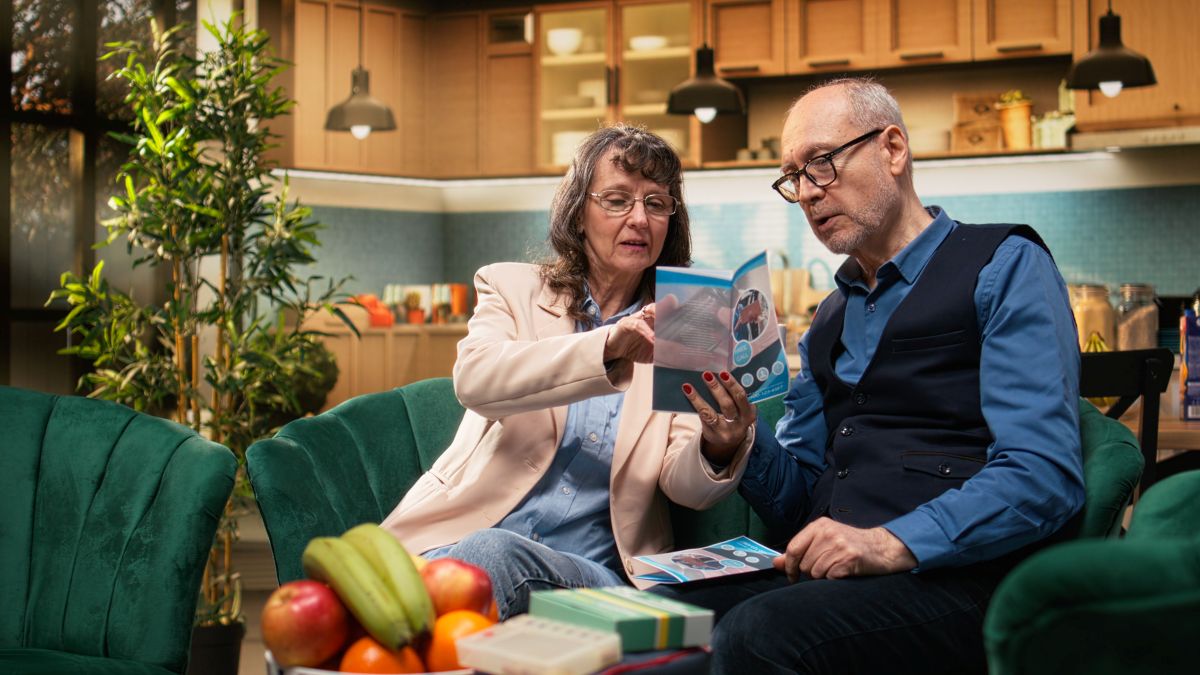
In many clinical trials involving older participants, materials are read not only by the participant but also by a caregiver or family member. This becomes especially important when caregivers are directly involved in the study and are expected to observe changes, attend visits, or help manage study requirements over time.
When caregivers have defined responsibilities, those expectations should be easy to find. Clear labeling, consistent placement, and visual separation from participant-only content allow caregivers to quickly confirm their role without searching through the entire document.
Designing materials with both readers in mind strengthens clarity for everyone involved.
Design Considerations for Older Readers
For older participants, design is not decorative—it is functional and purposeful. Layout and visual structure determine whether readers stay oriented, return confidently, and complete tasks as intended.
As we age, changes in vision and contrast sensitivity can make certain layouts harder to navigate. Clear typography with open, easy-to-distinguish letterforms (the clarity of the letter shapes) improves readability. Comfortable spacing prevents pages from feeling crowded. Headings and reminders should stand out without overwhelming the reader. Consistent placement from page to page helps participants know where to look.
High contrast between text and background improves clarity by sharpening letterforms and reducing visual strain. The goal is contrast that supports readability without feeling harsh or distracting.
The Case Against White Text on a Black Background
Contrast improves readability, but not all high-contrast designs are comfortable for extended reading. White text on a black background may look bold, but it can quickly increase visual fatigue. The eye works harder to stabilize bright letterforms against a dark field, which can make sustained reading uncomfortable.
For older participants, this effect can be more noticeable. Bright text may appear to bloom or shimmer, and afterimage effects can make it harder to shift back to standard layouts. Smaller type can also become more difficult to distinguish as bright strokes thin or flare.
For longer passages, dark text on a light background is generally more comfortable. Off-white backgrounds can help reduce glare, and high-contrast headings can be used strategically without reversing the entire page.
Designing for Confidence Without Compromise
Thoughtful writing and practical design help older participants move through study materials with confidence. When materials support re-entry, shared reading, and a comfortable pace, participants begin the study with a clearer understanding of what to expect.
Designing for later-life readers does not mean simplifying the content or lowering expectations. It means respecting how people process information and making it easier for them to navigate what matters to them.
Supporting older readers begins with understanding how they move through information and designing materials that meet them where they are.
The Imperial Advantage
Imperial Clinical Research Services brings deep experience to writing, designing, and producing materials that support older participants and caregivers across global studies. We understand how aging influences the reading experience, how caregivers engage with instructions, and how mixed-age studies create unique communication challenges.
Our approach combines protocol-specific accuracy with practical usability so every reader can quickly find what they need. If your clinical trial includes older participants or requires materials that perform well across a wide age range, we are ready to help you plan and deliver with clarity. Click the Contact Us button below or visit our website for more information.
Quick Q&A: Supporting Older Participants With Clearer Clinical Trial Materials
Why do older adults navigate clinical trial materials differently?
Later‑life cognitive and visual changes can affect how readers absorb information, track text, and re-orient themselves after pausing or stepping away.
What design choices help older readers stay oriented?
Clear headings, predictable structure, comfortable spacing, and reduced competition on the page make it easier for readers to return and find their place.
Why is print often a strong option for older research participants?
Printed participant-facing materials allow readers to pause, return, and review without navigating screens or menus, and they give caregivers a shared reference point.
How do caregivers factor into participant-facing material design?
Caregivers often read alongside participants. Clear labeling and consistent placement help them quickly find the information relevant to their role.
Does writing for older readers mean simplifying the content?
No. It means presenting accurate information in a way that supports how people process and revisit it over time.
Reference
World Health Organization. Ageing and health. By 2030, 1 in 6 people in the world will be 60 or older. https://www.who.int/news-room/fact-sheets/detail/ageing-and-health
