
Quick Summary
The Global Clinical Supplies Group (GCSG) European Knowledge Forum in Rome highlighted the importance of clear communication, positive leadership, collaborative problem-solving and well-being in clinical supply. Its interactive workshops encouraged participants and vendors to share practical ideas rather than rely on traditional presentation-led sessions.
_______________________________
What Made This Conference Different
Having returned home from the forum in Rome, I’ve been tackling seven days of emails and wondering how I survived on four hours of sleep, poor coffee, and far too much chocolate. But somewhere between the caffeine and conversations, something genuinely meaningful happened: I came home inspired.
The Global Clinical Supplies Group Forum has all the familiar ingredients of an industry conference: a keynote speaker, an exhibitor hall, breakout sessions, bad coffee, and enough chocolate to sustain us throughout the week. While the format felt familiar, the approach behind it was anything but. What set it apart was a collaborative, human-centered approach that put communication, problem-solving, and shared learning at the center of the experience.
The Power of Attitude and Communication
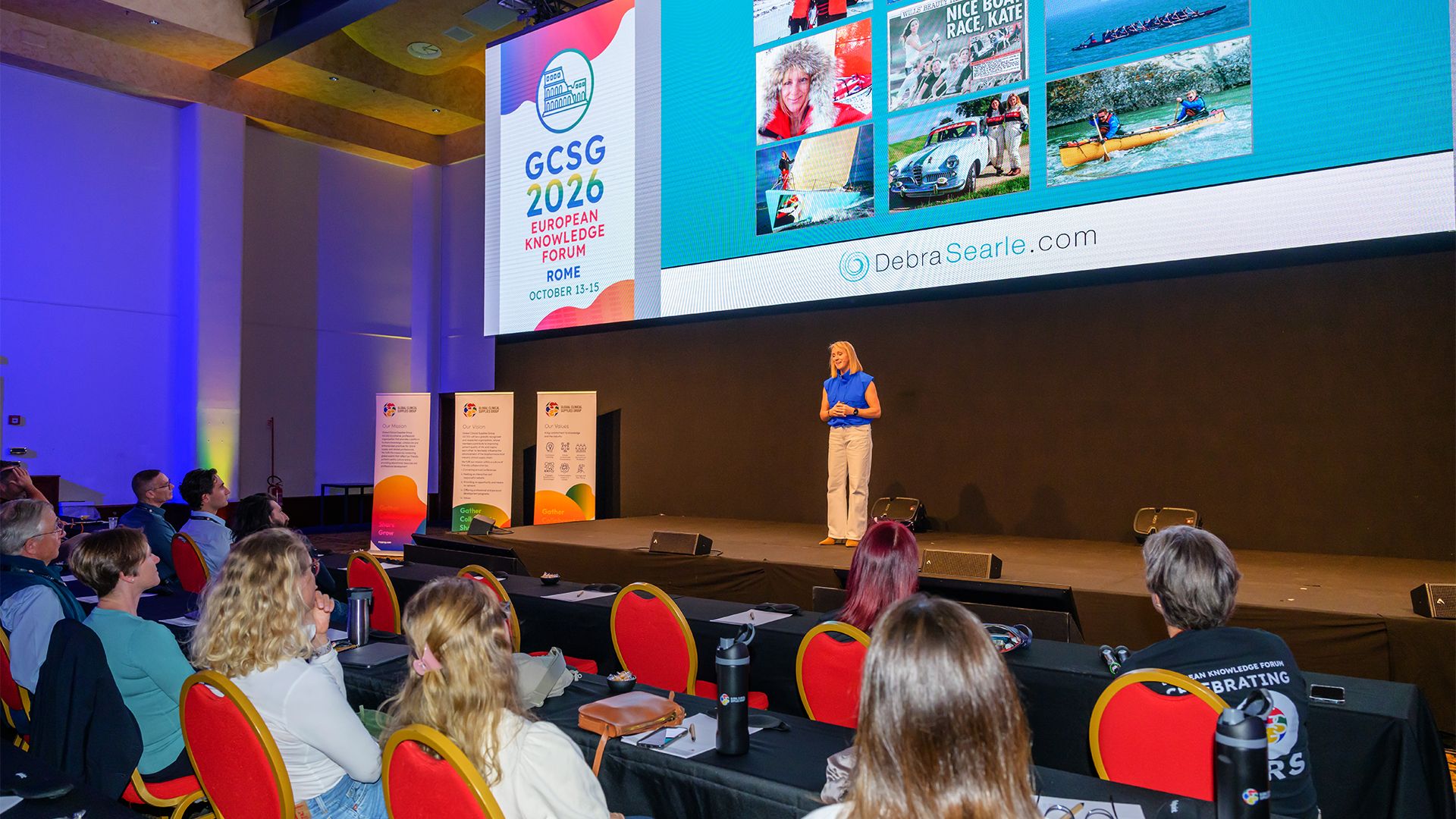
GCSG’s keynote speaker, Debra Searle (above), brought a perspective from outside the industry. An accomplished adventurer and entrepreneur, she has founded five companies and successfully rowed solo across the Atlantic Ocean. Her story, while filled with incredible anecdotes about rowing and resilience, was very much about communication and stress.
We all come across challenges in our day-to-day roles. When something goes wrong, it is natural to focus on what happened and why. But working on the resolution is every bit as important as identifying the root cause. A solution needs to be implemented quickly so as to minimize the impact on the people depending on us.
One statement from Debra particularly stood out: “Even being contagiously positive about a problem makes the problem itself less difficult to overcome.”
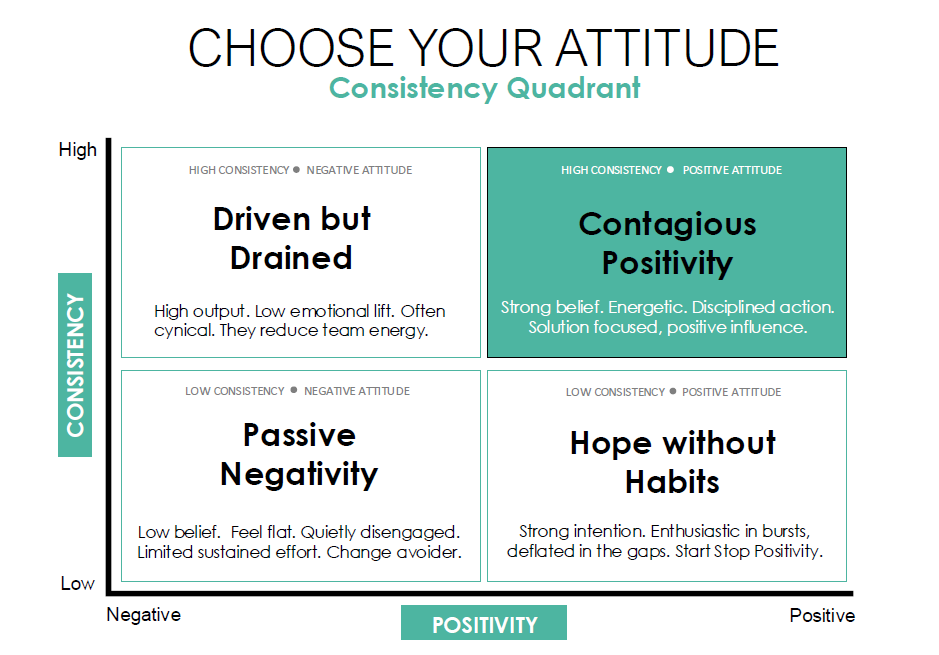
Debra Searle’s Consistency Quadrant shows how sustained action and a positive attitude combine to create “contagious positivity”—an energetic, solution-focused influence on others. Graphic courtesy of Debra Searle / DebraSearle.com.
Yes, she was talking about not being petrified by the size of the waves she needed to row over; however, the message struck true. Positivity does not make a problem disappear, but it affects the people around us. YOU/ME/WE get to choose our energy, and that shapes how others respond.
But you can’t be false in your communication of positivity. If something cannot be done, say so and explain why. Focus on the small wins and let people see what is going well. When they understand what is happening and can see progress being made, the crisis feels less immense and a solution more achievable.
As Debra put it: “It’s up to you to kill the void of silence with communication.” Communication builds confidence, removes uncertainty and, when the pressure is on, can matter every bit as much as the solution itself.
Breaking the “Rinse and Repeat” Cycle
Another key takeaway was Debra’s challenge not to keep doing the same thing—not just in a time of crisis, but in life in general. “Amazing results don’t come from repeating past successes.” That rinse-and-repeat model so many of us fall into may feel safe, but it rarely fixes, regenerates, or motivates anything. We should think outside the box, keep trying to do better, and choose a positive mental attitude to get the best results in life and at work.
Consistency alone isn’t always reassuring; someone can be consistently ineffective, or consistently work hard without communicating progress, wins, or setbacks. If people cannot see what is happening, they will not know that you are pulling out all the stops behind the scenes to help them. Progress needs to be both real and visible.
This philosophy was evident throughout the conference.
Why the GCSG Workshops Stand Out
One of the things that sets GCSG apart is its approach to breakout sessions. Rather than relying primarily on presentations, the workshops created space for participants to exchange perspectives and work through industry challenges together.
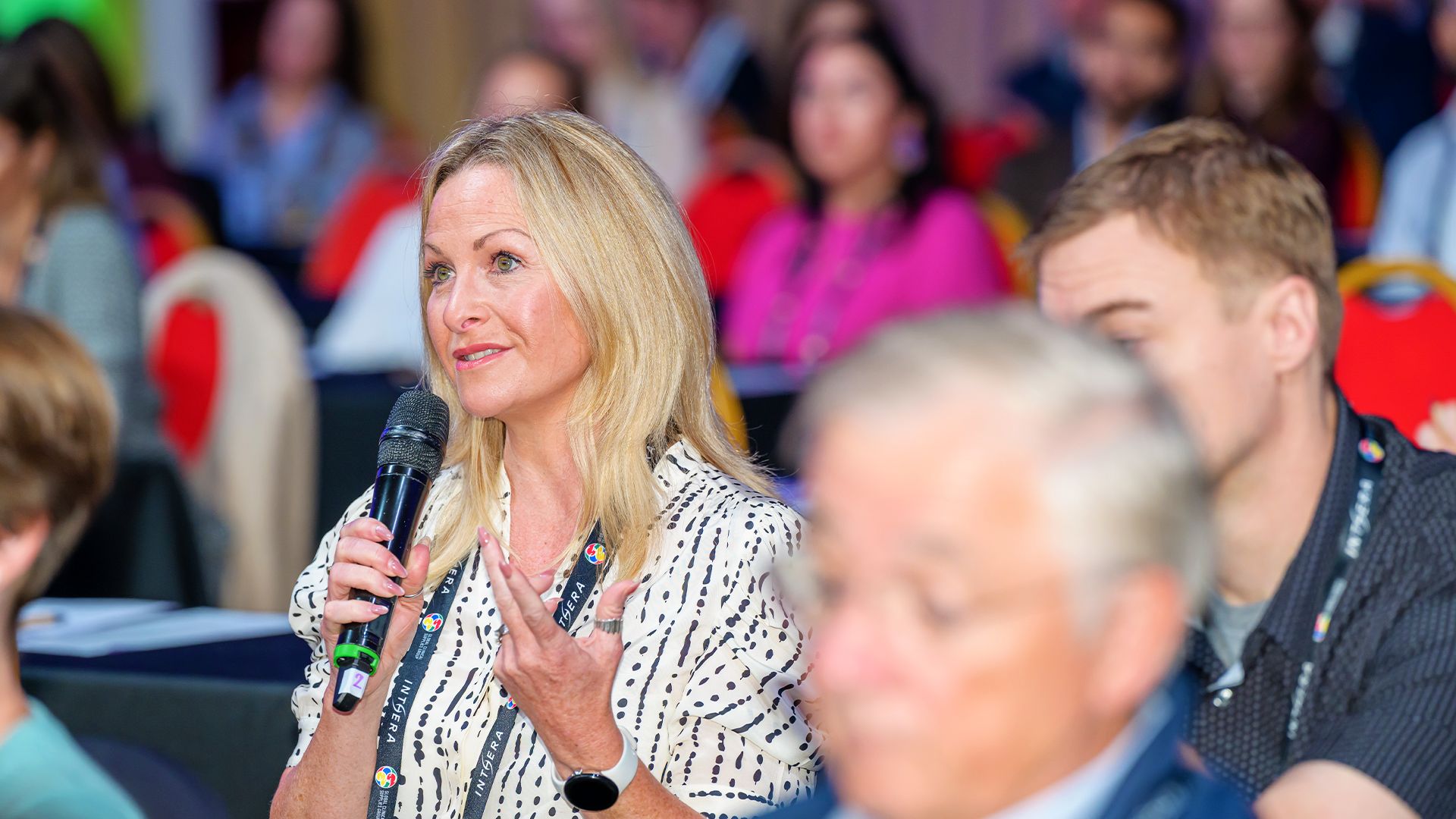
I enjoyed joining the conversation during a session at the GCSG European Knowledge Forum.
Each session lasted a full hour and was moderated by at least two people with different roles within the clinical trial supply industry. Workshop leaders shared a few slides, and the emphasis remained on discussion and participation. Small groups talked, shared ideas, moved around the room, and contributed as much to the discussion as the workshop leaders.
GCSG also encouraged exhibitors to take part in the workshops rather than stay in the exhibition hall. Bringing different perspectives into the room helped move conversations from observation to practical change and made the conference more engaging for everyone. Topics ranged from sustainability in clinical supplies and the challenges of LATAM trials, particularly navigating shipments, to the practicalities of direct-to-patient solutions.
The sessions were engaging, honest, and collaborative.
A Conversation We Need More Often
One workshop in particular really impressed me. The topic was stress and stress management in leadership, led by Steve Jacobs and Phil Tugwell. Despite attending countless industry conferences over the years, I cannot recall seeing this subject addressed in a workshop setting before.
Together, the group explored what drives stress, how to navigate it, practical techniques for managing it, and ways we can better support ourselves and those around us. The discussions centered on communication, mindfulness, self-awareness, and creating healthier environments for our teams.
As someone who has completely adapted my life to minimize stress and do whatever I can to fuel my health and well-being, I found the conversation especially valuable because it treated self-care not as a personal luxury, but as part of responsible leadership.
When we invest in our own well-being, we become more focused, resilient, energized and capable of handling challenges. Looking after ourselves allows us to better support our colleagues, our clients and ultimately the patients we serve.
We work in an industry where the decisions we make can directly impact lives. We need to make sure we do not become collateral damage in the process.
Final Thoughts
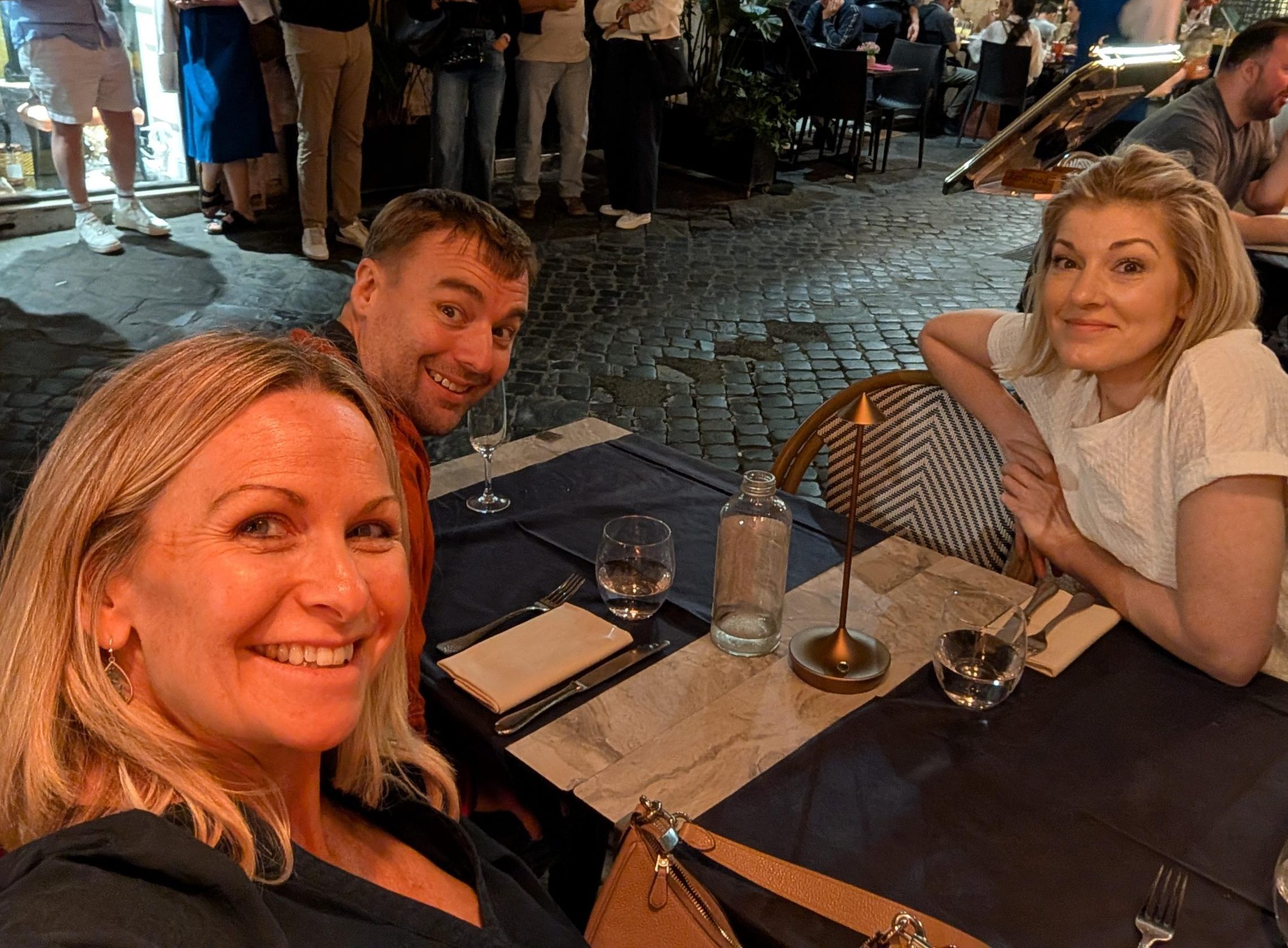
Ending the day the best way I know how—dinner and time with my colleagues, Ryan and Frankie.
What stayed with me most was how human the entire conference felt. The keynote, workshops, and conversations all reinforced the importance of communication, positive energy, and looking after one another, not only as clinical trial supply industry professionals, but as people.
That made the time spent with my colleagues Ryanand Frankie, whom I don’t often have the opportunity to travel with, even more meaningful. It was equally rewarding to meet so many new industry professionals. The connections, conversations, and friendships formed over the week are ones I may never have made without this event.
GCSG delivered more than professional development. It gave people the time to talk openly and properly connect with one another. Kudos to GCSG for creating an experience that brought people into the conversation and both literally and figuratively fed our souls.
